Introduction
Your keycaps are the only part of your keyboard you actually touch. Yet most buyers ignore the material.
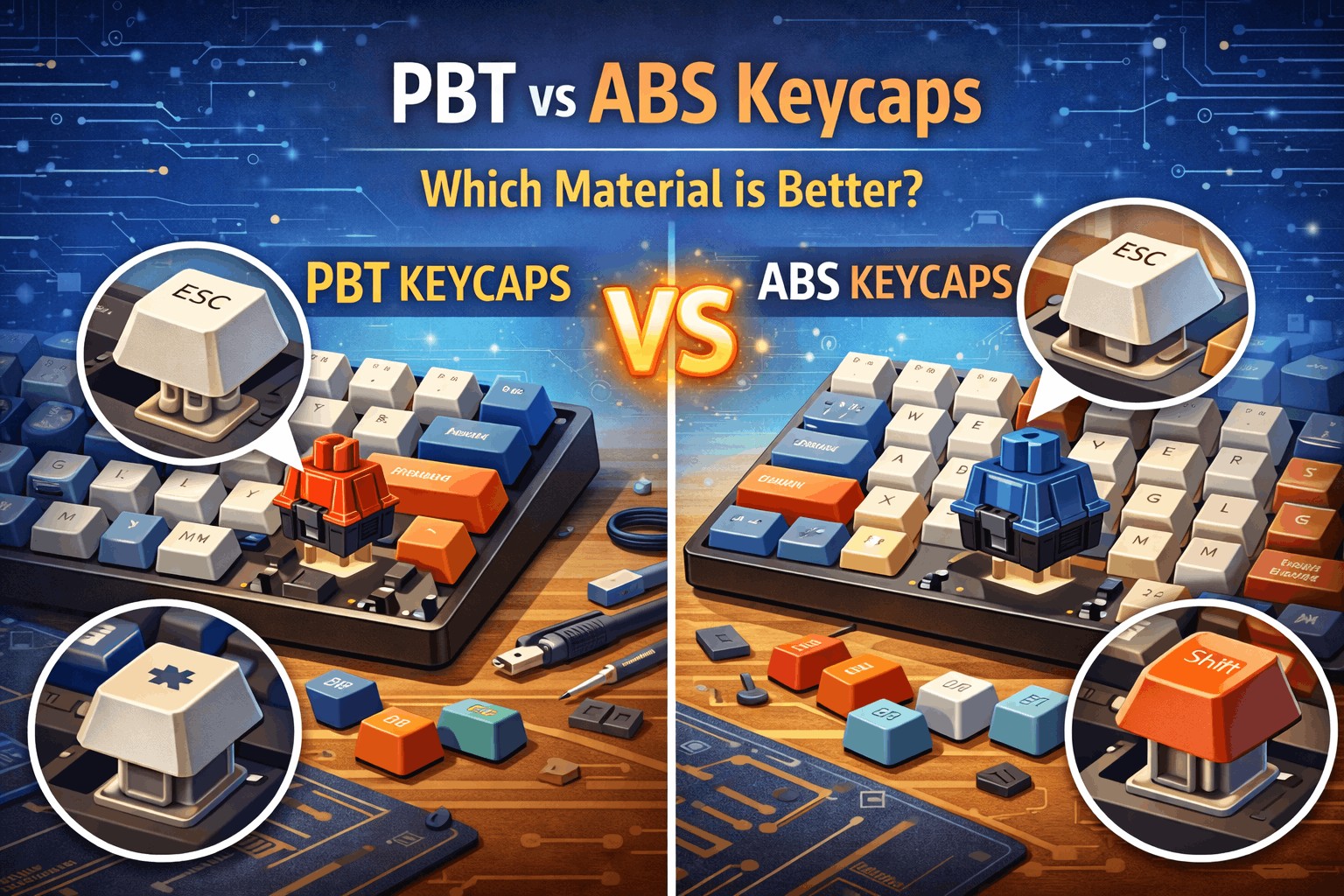
This oversight costs them in daily comfort, long-term durability, and satisfaction. The material of your keycaps—whether PBT or ABS—shapes your entire typing experience: how the keys feel under your fingers, how they sound when pressed, how they look after months of use, and how much you'll spend on replacements. To hear those acoustic differences for yourself, our switch sound test guide explains how to record and compare keyboards under consistent conditions.
For decades, ABS dominated mechanical keyboards. It's cheap, easy to manufacture, and supports vibrant colors and RGB shine-through. But PBT keycaps emerged as a premium alternative, and by 2026, they've earned their place as the enthusiast standard.
The problem: neither is objectively "better." Both are excellent for different reasons, and choosing the wrong material for your priorities means spending months wishing you'd chosen differently.
This guide compares PBT and ABS directly across every dimension that matters, explaining not just the technical differences, but what they mean for your daily typing experience.
Note: This guide contains affiliate links. If you purchase through our links, we may earn a commission at no extra cost to you. This helps support our testing and content creation.
Quick Comparison
- PBT keycaps: Textured, highly durable, no shine, deeper "thock" sound, slightly more expensive ($25-150+), maintenance-free
- ABS keycaps: Smooth, glossy initially, develops shine after 1-2 years, higher-pitched "clack" sound, cheaper ($15-120+), excellent for RGB lighting
- Best for typing feel: PBT (textured grip, consistent for years)
- Best for aesthetics: ABS (vibrant colors, RGB shine-through) or PBT (matte, premium look)
- Real difference: PBT wins durability; ABS wins color variety and RGB. Choose based on priorities, not hype.
What Are Keycap Materials?
Before comparing, understand what these materials actually are.
PBT (Polybutylene Terephthalate)
PBT is a thermoplastic polymer—a plastic that softens when heated but remains relatively rigid at room temperature. It has several technical properties that matter for keyboards:
- Higher melting point (223°C / 433°F): Resists heat and warping
- Denser molecular structure: Harder and more rigid than ABS
- Oil and chemical resistant: Doesn't absorb skin oils that cause shine
- Naturally textured surface: Even new PBT keycaps feel slightly rough/matte
ABS (Acrylonitrile Butadiene Styrene)
ABS is also a thermoplastic polymer, but with different properties:
- Lower melting point (105°C / 221°F): Easier to mold into shapes
- Flexible molecular structure: Softer and more malleable
- Oil-absorbing: Absorbs skin oils, causing shine over time
- Naturally smooth surface: New ABS feels glossy and slick
Why These Two Dominate
Both are ideal for keyboard manufacturing because:
- They're durable enough for 5+ years of constant typing
- They can be injection molded (the standard manufacturing process)
- They're cost-effective at scale
- They're compatible with existing manufacturing techniques

Key Differences Explained
1. Texture & Feel
PBT keycaps:
- Textured, slightly rough surface (even when brand new)
- "Dry" feel—fingers don't slide easily
- Matte finish
- Grip improves slightly as fingers develop calluses
- Feels substantial and premium
ABS keycaps:
- Smooth, glossy surface
- "Slick" feel—fingers glide smoothly
- Shiny finish
- Slippery when hands are dry or sweaty
- Feels lighter and more nimble
Practical impact: Typing on PBT feels like writing on textured paper; typing on ABS feels like writing on glass. PBT provides constant, reliable grip. ABS feels fast but can feel slippery in some conditions.
Winner: Subjective. PBT for grip and texture, ABS for smooth glide.
2. Durability & Shine Development
This is where the biggest real-world difference emerges.
ABS keycaps (the shine problem):
- Develops glossy "polish" on heavily-used keys (typically WASD and spacebar) within 6-18 months of regular use
- Shine is caused by skin oils wearing down the surface texture
- Different people develop shine at different rates (skin chemistry matters)
- Once shiny, the keycaps become slippery and look worn
- Shine is reversible temporarily (rubbing with abrasive materials) but returns quickly
- Community consensus: ABS develops noticeable shine after about 2 years of regular use
PBT keycaps (shine resistant):
- Extremely resistant to shine, typically taking 5+ years of heavy use to show visible wear
- Even after years, PBT doesn't develop the glossy, greasy appearance of ABS
- Maintains consistent feel and appearance indefinitely
- Can eventually develop slight gloss with extreme use, but far less noticeable
- Some heavy users report their PBT sets staying pristine after a decade
Important caveat: PBT can develop shine, just extremely slowly. No plastic is immune to wear. But the difference in timeline is dramatic: ABS months vs PBT years.
Winner: PBT decisively. If you care about keycaps staying consistently looking new, PBT is worth the premium.
3. Sound Profile
PBT keycaps:
- Deeper, lower-pitched sound
- "Thocky" character—muted and satisfying
- Less resonant (absorbs vibration better)
- Frequency range: typically 200-400 Hz
- Sounds "solid" and "premium"
ABS keycaps:
- Higher-pitched, brighter sound
- "Clacky" character—sharp and crisp
- More resonant (amplifies switch sound)
- Frequency range: typically 400-600 Hz
- Sounds "crisp" and "responsive"
Context matters: Sound also depends heavily on switch type learn more in our cherry mx vs gateron guide, mounting style read our gasket mount vs tray mount guide, and overall keyboard construction. Keycap material is just one component.
Winner: Preference. Enthusiasts often prefer PBT "thock", but gamers sometimes prefer ABS "clack."
4. Color & Aesthetics
PBT advantages:
- Matte finish looks more premium to many users
- Colors appear more subtle and mature
- White PBT stays whiter longer (resistant to yellowing)
- Textured surface catches light beautifully, creating depth
- Popular in 2024-2026 for minimalist, professional aesthetics
ABS advantages:
- Produces extremely vibrant, saturated colors
- Glossy finish creates sleek appearance
- Easier to achieve pure blacks and bright whites
- RGB shine-through: Transparent legends allow backlight to shine through (PBT blocks this)
- Develops "vintage patina" shine that some users actively prefer
Manufacturing impact:
- ABS's lower melting point makes complex color designs easier
- Double-shot keycaps easier with ABS (more common in premium ABS sets)
- Dye-sublimation requires PBT (ABS doesn't accept dye sublimation)
- PC (polycarbonate) emerging as compromise: transparent like ABS, durable like PBT
Winner: ABS for RGB gaming setups and vibrant colors. PBT for muted premium aesthetic.
5. Legend Quality & Manufacturing Methods
This is where material choice significantly impacts durability.
Legend Methods Explained:
Pad Printing: Budget option, legends wear off quickly (avoid for long-term use)
Laser Etching: Legends burned into surface, looks sharp but can wear
Dye-Sublimation: Heat infuses dye into PBT (PBT only), legends last indefinitely because dye is infused, not surface-applied. Cannot do RGB shine-through.
Double-Shot: Two layers of plastic molded together, legends are molded into keycap. Legends never wear off. More common with ABS. Allows RGB shine-through.
Premium ABS vs Premium PBT:
- Premium ABS (GMK brand): Ultra-thick (1.5mm), double-shot legends, brilliant colors, legends never wear off. At $120-200, GMK sets rival PBT quality. Many enthusiasts consider GMK ABS to match or exceed PBT quality.
- Premium PBT (Dye-sub): Legends infused into plastic, last indefinitely, matte finish, permanent color.
Winner: Tie. Both can have excellent legends if manufacturing is premium. Cheap ABS loses this round (pad-printed legends fade). Cheap PBT laser-etched still outlasts cheap ABS.
6. Price Comparison
ABS keycaps (2026 pricing):
- Budget sets: $15-30
- Mid-range sets: $30-60
- Premium GMK sets: $120-200
- Cheapest option generally
PBT keycaps (2026 pricing):
- Budget sets: $25-40
- Mid-range sets: $40-80
- Premium sets: $80-150+
- 20-50% more expensive typically
Full keyboard impact:
- 87-key board with budget ABS: ~$20 in keycap cost
- 87-key board with budget PBT: ~$30 in keycap cost
- Premium GMK ABS set: ~$140
- Premium dye-sub PBT set: ~$100-120
Why PBT costs more:
- Higher melting point requires more energy to mold
- More difficult to shape (brittle when hot)
- Tighter quality control needed
- Manufacturing process more complex
- Lower production volumes
- Premium positioning (enthusiast market)
Direct Comparison Table
| Feature | PBT Keycaps | ABS Keycaps |
|---|---|---|
| Texture | Textured, matte | Smooth, glossy |
| Feel | Dry, grippy | Slick, nimble |
| Durability | Excellent (10+ years) | Good (shine after 1-2 years) |
| Shine Resistance | Very high (years to develop) | Low (months to develop) |
| Sound | Deep "thock" (200-400Hz) | Sharp "clack" (400-600Hz) |
| Color Vibrancy | Muted, subtle | Bright, vivid |
| RGB Compatibility | Poor (opaque) | Excellent (transparent) |
| Weight | Heavier (20-30%) | Lighter |
| Price | $25-150+ | $15-120+ |
| Common Legend Methods | Dye-sub, double-shot | Double-shot, laser |
| Maintenance | Low (stays consistent) | Medium (shine develops) |
| Best For | Typing, longevity, "thock" | Gaming, RGB, vibrant colors |
Which Should You Choose?
Choose PBT Keycaps If:
✅ You want keycaps that stay looking new for 5-10 years
✅ You prefer textured, dry feel (better grip)
✅ You're bothered by ABS shine and glossy appearance
✅ You prioritize typing feel consistency over everything
✅ You want matte, mature aesthetic
✅ You're willing to pay 20-50% premium
✅ RGB lighting isn't important to your setup
✅ You prefer "thocky" sound signature
Best PBT keycap sets:
Budget: YMDK or Akko PBT keycaps (~$30-40)
- Affordable entry to PBT
- Good texture, durable
- Monochrome colors typically
Mid-Range: Akko ASA or Cherry PBT (~$45-65)
- Better quality than budget
- More color options
- Improved sound
Premium: Drop + collaboration or high-end dye-sub (~$100-150+)
- Exceptional quality
- Limited edition designs
- Professional appearance
Example PBT keycap set on Amazon :
Check Current Price on Amazon
Choose ABS Keycaps If:
✅ You prefer smooth, glide-y feel for rapid typing
✅ You want vibrant, bright colors (budget-friendly)
✅ RGB backlight is central to your setup
✅ You're budget-conscious
✅ You don't mind (or prefer) shine developing
✅ Gaming is primary use (smoother for rapid keys)
✅ You prefer highest-brightness white possible
✅ Shine-through legends appeal to you
Best ABS keycap sets:
Budget: HyperX pudding keycaps or Razer keycaps (~$20-30)
- Excellent value
- Great RGB shine-through
- Surprising durability for price
Mid-Range: Standard double-shot ABS (~$40-70)
- Vibrant colors
- Good RGB effects
- Legends won't wear off
Premium: GMK keycap sets (~$120-200+)
- Industry-leading quality
- Ultra-thick (1.5mm) plastic
- Brilliant colors, professional appearance
- Rivals PBT quality in premium form
Example ABS / shine-through set on Amazon :
Check Current Price on Amazon
Special Case: GMK Keycaps
GMK deserves separate attention because they represent premium ABS that challenges the "PBT is always better" narrative.
GMK keycaps are German-manufactured double-shot ABS that:
- Use original Cherry molds (historic authenticity)
- Are ultra-thick (1.5mm vs standard 1.2mm)
- Have vibrant, precisely-colored legends
- Sound excellent due to thickness (deeper than typical ABS)
- Cost $120-200 per set
- Develop shine slower than budget ABS (but still do eventually)
Verdict on GMK: Premium ABS that matches or exceeds many PBT sets in quality. If budget allows ($120+), GMK is an alternative to PBT worth considering, especially if you want RGB compatibility or specific colors.
The Myth of "PBT Is Always Better"
This narrative needs correcting.
Old reality (2015-2020): PBT was significantly better than budget ABS.
2026 reality: Premium ABS (GMK) matches or exceeds budget PBT. The material gap has compressed dramatically.
What's actually true:
- Premium PBT > Premium ABS in durability
- Premium ABS (GMK) ≈ Premium PBT in overall quality
- Premium either > Budget either by huge margin
- Specific set quality matters more than material choice
Where the "PBT is better" narrative comes from:
- Enthusiast community bias toward durable options
- Valid point that most budget ABS is genuinely cheap
- PBT's resistance to shine is objectively measurable
Where it breaks down:
- Premium ABS (GMK) is legitimately excellent
- Some PBT sets are mediocre quality
- Sound preference is subjective
- RGB compatibility is genuine ABS advantage
Honest take: Material matters, but manufacturing quality matters more. A $50 GMK ABS set outperforms a $30 generic PBT set. Choose based on your actual needs, not community gatekeeping.
Can You Mix PBT and ABS?
Technically yes, practically not recommended.
Technical compatibility: Both fit MX stems, heights usually match, work on any keyboard.
Practical problems:
- Feel inconsistency: Your fingers immediately notice texture difference between keys
- Sound inconsistency: PBT "thock" mixed with ABS "clack" sounds jarring
- Aesthetic inconsistency: Colors look different (ABS glossy vs PBT matte), shine develops on ABS keys only
- Keyboard fatigue: Inconsistency makes typing feel "off"
When mixing makes sense:
- Artisan keycaps (often different material, acceptable)
- Spacebar experimentation (single key impact minimal)
- Emergency replacement (better than missing key)
Recommendation: Stick with one material per keyboard for cohesive experience.
Maintenance & Care
Cleaning PBT Keycaps
Safe methods:
- Warm soapy water with dish soap
- Soft brush for texture crevices
- Air dry completely before reinstalling
- Ultrasonic cleaner acceptable (use caution)
Avoid:
- Harsh chemicals (acetone, alcohol can damage plastic)
- Water above 60°C / 140°F (approaches melting point)
- Abrasive scrubbing (can wear texture)
Cleaning ABS Keycaps
Safe methods:
- Same as PBT (warm soapy water)
- Microfiber cloth for shine removal (temporary fix)
- Denture tablets work (enthusiast trick)
Avoid:
- Harsh abrasives (scratch glossy surface easily)
- Very hot water (ABS lower melting point)
Preventing ABS Shine
Tips:
- Wash hands before typing (reduces oil transfer)
- Use keyboard cover when not in use
- Rotate keycap positions occasionally
- Accept shine as natural aging (mindset)
Reality check: Shine is inevitable on ABS with heavy use. Some users embrace it as "vintage aesthetic."
FAQ: Common Questions
Q: Does PBT or ABS affect typing speed?
A: Not significantly. Texture difference is noticeable but doesn't impact speed for most users. Personal preference matters more than material. Gamers switching from ABS to PBT sometimes feel slower initially (different grip), but adaptation is quick.
Q: Can you restore shine to original matte on ABS keycaps?
A: Temporarily only. Magic erasers or fine abrasives can reduce shine, but damage the plastic and shine returns quickly. No permanent solution exists. Accept shine or switch to PBT.
Q: Are PBT keycaps heavier on the switches?
A: Slightly (20-30% heavier), but modern switches easily handle this. No meaningful performance impact. The extra weight contributes to "premium" feel and slightly deeper sound.
Q: Why are some PBT keycaps smooth and others textured?
A: Manufacturing variation. PBT naturally has slight texture, but heavy polishing can smooth it. Most PBT embraces texture, but "smooth PBT" exists (rarer, more expensive).
Q: Do ABS keycaps yellow over time?
A: White ABS can yellow with prolonged UV exposure over years. PBT resists yellowing better. Keep keyboards away from direct sunlight to minimize this. Yellowish light sources also accelerate yellowing.
Conclusion: Making Your Choice
PBT and ABS are both legitimate materials with genuine trade-offs. Neither is objectively "better"—they serve different priorities.
PBT wins at: Durability, consistent feel over years, tactile texture, muted "thock" sound, low maintenance, premium aesthetics (to many users)
ABS wins at: Vibrant colors, RGB shine-through, smooth feel, crisp "clack" sound, affordability, color variety
The enthusiast preference for PBT is valid but not universal. Professional gamers often prefer ABS smoothness. Content creators with RGB setups choose ABS. Typists who value consistency choose PBT.
Don't overspend chasing "perfect" material. Budget PBT works great. Premium ABS (GMK) rivals premium PBT. The difference between mediocre and good matters more than material choice between good options.
If you're uncertain, consider a hot-swappable keyboard read our guide to hot-swappable keyboards. You can install a keycap set, use it for weeks, then try the other material to discover your genuine preference.
The best keycap material is the one that makes YOU enjoy typing every single day. Not the one the internet says is better. Not the one that costs more. The one that feels right under your hands and sounds right to your ears.
Choose with confidence.