Introduction
Keycaps are the plastic pieces you actually touch when typing. They might seem like simple components—just shaped plastic that sits on switches—but keycaps profoundly affect how keyboards feel, sound, and look. The material, thickness, profile shape, and manufacturing method all influence typing experience in ways that surprise people who've only used stock keycaps on budget keyboards.
Premium keycaps can transform mediocre keyboards into pleasant typing experiences. Thick PBT keycaps create deeper sound and more substantial feel than thin ABS keycaps. Different profiles change typing angles and finger reach. Quality manufacturing ensures legends that won't fade after years of use. These improvements are immediately noticeable when upgrading from stock keycaps to quality alternatives.
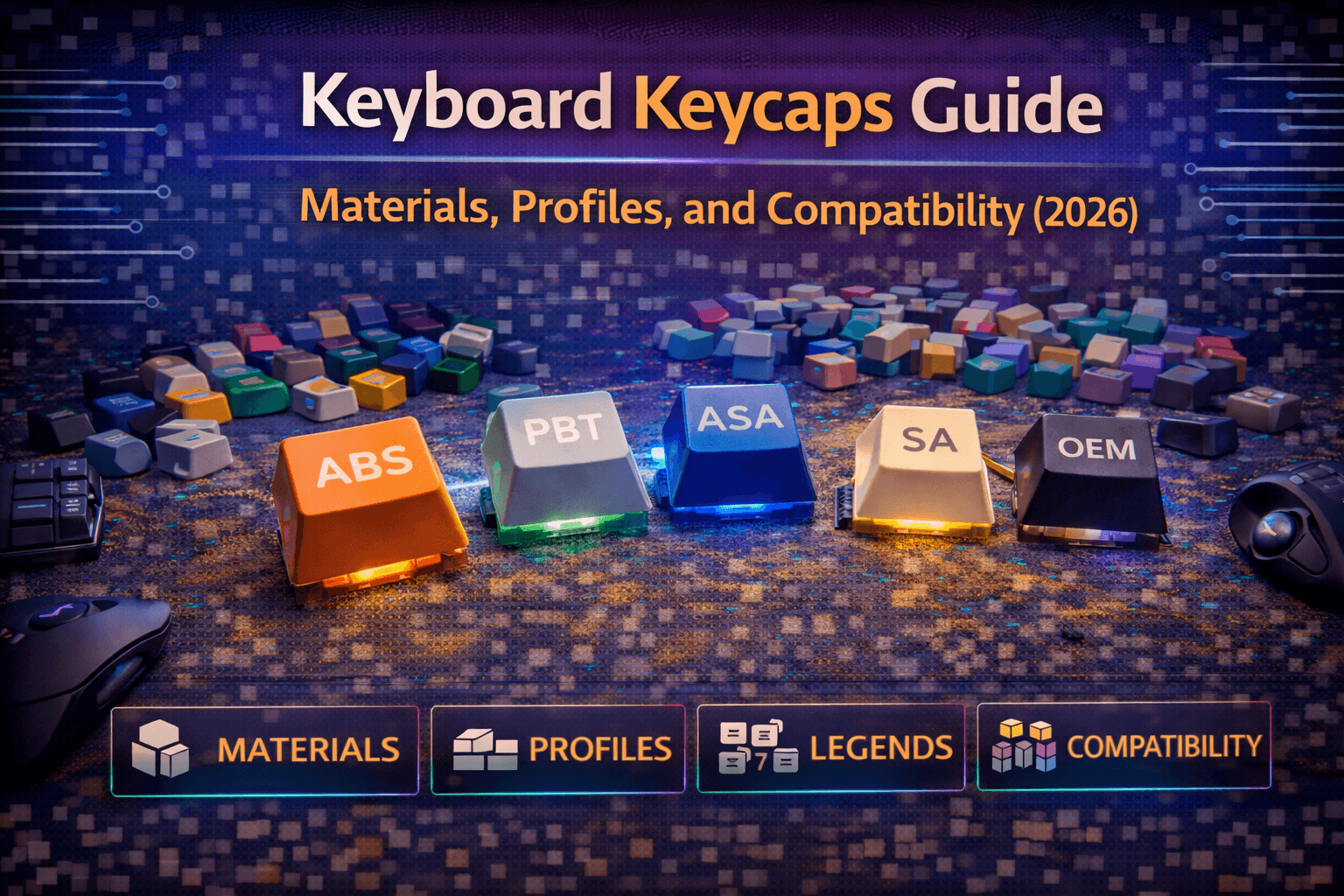
The keycap market is vast and confusing. Materials include ABS, PBT, and specialty options. Profiles range from low Cherry to towering SA. Manufacturing methods include doubleshot, dye-sublimation, laser etching, and pad printing. Compatibility varies based on keyboard layout, stem type, and stabilizer requirements. For beginners, navigating these options feels overwhelming.
Premium keycap sets cost $50-150, with specialty sets reaching $200+. Understanding what you're paying for helps you spend money on characteristics that actually matter for your use case rather than chasing specs that provide minimal real-world benefit. This guide explains keycap materials and their characteristics, profiles and how they affect typing, manufacturing methods and their durability, compatibility issues to avoid, and recommendations for best keycap sets across different budgets and preferences in 2026.
Keycap Materials: PBT vs ABS
Material choice affects feel, sound, durability, and aesthetics. Understanding material characteristics helps you choose keycaps that match your priorities.
ABS (Acrylonitrile Butadiene Styrene)
ABS is the most common keycap material. It's inexpensive to manufacture, easy to mold into precise shapes, and accepts vibrant colors exceptionally well. Most stock keycaps on keyboards use ABS because it's cost-effective for mass production. ABS keycaps have a smooth, slightly slippery surface texture. They're lighter weight than PBT keycaps, creating a higher-pitched typing sound with less depth. The smooth texture feels pleasant initially but becomes noticeably shiny and greasy over months of use as oils from your fingers wear the surface.
This shine development is ABS's primary drawback. After 6-12 months of regular use, frequently-pressed keys like WASD, Space, and Enter develop visible shine that looks worn and feels slippery. This aesthetic degradation bothers many people, though it doesn't affect functionality. Quality ABS keycaps from premium manufacturers feel better than cheap ABS, but all ABS develops shine eventually. The shine is faster and more pronounced on thin, cheap ABS than thick, quality ABS, but it's an inevitable characteristic of the material.
ABS also suffers from UV yellowing over time, particularly in lighter colors exposed to sunlight. White ABS keycaps gradually develop a yellowish tint. This discoloration is primarily aesthetic but affects appearance if you care about original look.
ABS advantages: accepts vibrant colors beautifully, molds into precise shapes, smooth pleasant texture when new, and costs less than PBT. ABS disadvantages: develops shine with use, lighter sound, slightly slippery feel compared to PBT, prone to UV yellowing.
Note: This guide contains affiliate links. If you purchase through our links, we may earn a commission at no extra cost to you. This helps support our in-depth testing and content creation.
PBT (Polybutylene Terephthalate)
PBT is premium keycap material that resists shine, has textured surface, and creates deeper typing sound. PBT costs more than ABS and is harder to manufacture, so PBT keycaps are typically more expensive. PBT keycaps have a slightly textured, matte surface that feels less slippery than ABS. They're denser and heavier than ABS, creating lower-pitched, thockier typing sound that many people prefer. The texture and weight create substantial, premium feel.
The primary advantage of PBT is shine resistance. PBT keycaps maintain their appearance for years even with heavy use. The surface might show very slight smoothing after many months of intense use, but nothing like ABS shine. For people who keep keyboards long-term, PBT's durability justifies higher cost. PBT is also more heat and UV resistant than ABS, so yellowing occurs much more slowly if at all.
PBT has limitations with colors. The material doesn't accept bright, vibrant colors as well as ABS. PBT sets typically use more muted, pastel colors or stick to white, black, and gray. When manufacturers attempt vibrant colors in PBT, the results are often less saturated than equivalent ABS. This limitation is improving as manufacturers develop better techniques, but it remains a consideration.
PBT also shrinks slightly during cooling after molding, making precise complex shapes harder to manufacture. This is why many sculpted high-profile keycap sets use ABS—the material properties allow better shape precision. Some premium manufacturers also use ABS for color versatility and backward compatibility with their popular sets.
PBT advantages: no shine development, textured grippy feel, deeper sound, premium feel, long-term durability, UV and heat resistant. PBT disadvantages: costs more, limited color options, harder to manufacture complex shapes precisely, prone to spacebar warping in some cases.
Choosing Between Materials
Choose PBT if you keep keyboards long-term, prefer textured feel, want deeper sound, and can accept more limited color options. PBT is best choice for most people prioritizing quality and longevity. Choose ABS if you want vibrant colors, prefer smooth texture, or have budget constraints. Quality ABS from good manufacturers still feels good, just develops shine over time. If you replace keycaps every 1-2 years anyway, ABS shine isn't a major concern.
For premium sculpted sets in specific profiles like SA or MT3, ABS is often the only option due to manufacturing requirements. In these cases, you're accepting shine as trade-off for the profile characteristics you want. See our PBT vs ABS keycaps guide for detailed material comparison.
Specialty Materials
Some specialty keycaps use alternative materials: POM (Polyoxymethylene) is extremely smooth with low friction, producing unique sound. It's rare and expensive. Polycarbonate is usually used for transparent keycaps for RGB lighting. It's not common for full sets. Resin is used for artisan keycaps, not full sets. Each keycap is individually cast. These specialty materials are niche options for enthusiasts rather than mainstream choices.
Keycap Profiles Explained
Profile refers to keycap height and shape. Different profiles create different typing angles, reach distances, and aesthetics. Understanding profiles helps you choose options that feel comfortable.
Cherry Profile
Cherry profile is the most popular enthusiast keycap profile. It's relatively low profile with sculpted rows—different heights for different rows creating curved typing surface. Keys are slightly cylindrical on top, cupping your fingertips. Cherry profile creates comfortable typing angle without excessive height. The sculpting follows the natural finger arc, and the low height means less finger travel. Many people find Cherry profile ideal balance between comfort and aesthetics.
Advantages: comfortable typing angle, low enough for speed, widely available, works well with most cases. Disadvantages: slightly cramped feel for people with large hands, less dramatic appearance than high profiles.
OEM Profile
OEM profile is what most stock keyboards use. It's medium height, sculpted rows, slightly taller than Cherry with less aggressive sculpting. Cylindrical top like Cherry. OEM is the familiar profile most people have used for years. It's comfortable and proven, though not particularly special. Think of OEM as the default—it works fine, but enthusiasts often prefer alternatives.
Advantages: familiar feel, comfortable for most people, widely available, affordable. Disadvantages: not particularly premium feeling, less interesting than alternative profiles.
SA Profile
SA profile is tall, sculpted profile with spherical top surfaces. Keys are significantly taller than Cherry or OEM, creating dramatic appearance and unique typing feel. SA creates typewriter-like aesthetic and feel that enthusiasts find appealing. The tall profile requires more finger travel, reducing typing speed for some people but creating satisfying mechanical feel that enthusiasts enjoy. The spherical tops feel different from cylindrical profiles.
Advantages: beautiful vintage aesthetic, unique typing feel, high-quality manufacturing, substantial presence. Disadvantages: tall profile slows typing for some people, expensive ($150-200+ for quality SA sets), primarily available in ABS which develops shine.
DSA Profile
DSA profile is uniform height—all keys same height, no sculpting. Each key is spherical topped and relatively short. This creates a flat typing surface rather than curved. DSA appeals to people who dislike sculpting or want consistent feel across all rows. The uniform height also simplifies keycap compatibility since any keycap fits any position.
Advantages: uniform feel, good for non-standard layouts, affordable, compact height. Disadvantages: lack of sculpting makes touch-typing position awareness harder, flat profile isn't as comfortable as sculpted alternatives for many people.
XDA Profile
XDA profile is similar to DSA—uniform height, no sculpting—but larger keycap tops for more finger contact area. XDA is slightly taller than DSA. XDA attempts to improve DSA's comfort through larger tops while maintaining uniform advantages. Results are subjective—some people love it, others prefer sculpted profiles.
KAT Profile
KAT profile is medium-height sculpted profile designed as modern alternative to Cherry. It's slightly taller than Cherry with gentler sculpting. Cylindrical tops. KAT targets sweet spot between Cherry's low profile and SA's tall profile. It's comfortable alternative for people finding Cherry too low and SA too tall.
Advantages: comfortable middle ground, good typing feel, growing availability. Disadvantages: less widely available than Cherry or OEM, typically expensive ($120+).
MT3 Profile
MT3 profile is distinctive high-profile with deep scoops designed by Matt3o. Very aggressive sculpting creates strong cupping of fingers. Medium-tall height. MT3 feels unique—the deep scoops either feel amazingly comfortable or awkwardly restrictive depending on typing style and hand size. It's polarizing profile that people strongly like or dislike.
Advantages: unique comfortable feel for fans, excellent finger positioning awareness, premium appearance. Disadvantages: tall profile, expensive ($120+), polarizing feel, typically only available from Drop.
Low-Profile Keycaps
Low-profile keycaps designed for low-profile switches (Kailh Choc, Cherry Low Profile) are a separate category. These are much thinner than standard profiles. Low-profile is different market segment—laptops and ultra-slim keyboards. Standard profiles can't be used with low-profile switches and vice versa.
Choosing a Profile
Try different profiles if possible. Mechanical keyboard meetups, friends with keyboards, or purchasing switch testers with different profile samples help you discover preferences. If buying blind, Cherry profile is safe default for most people—comfortable, practical, widely available. OEM works if you want familiar feel. SA or MT3 if you want dramatic high-profile experience despite trade-offs.
Personal preference matters more than objective superiority. No profile is universally best. See our keyboard layouts guide for how layout affects keycap needs.
Legend Methods and Durability
Legends are the letters, numbers, and symbols on keycaps. How they're created affects appearance and longevity.
Doubleshot Molding
Doubleshot molding is premium legend method. Two separate colors of plastic are molded together—one for keycap body, one for legend. The legend is separate piece of plastic integrated into keycap during manufacturing. Because legends are plastic through the full keycap depth, they never wear off or fade. You could sand the keycap surface and legends would still be visible. This permanence justifies doubleshot's premium pricing.
Doubleshot also creates sharp, clean legends with good contrast. The process works best with simple fonts and limited colors. Complex multicolor legends are difficult or impossible with doubleshot. Doubleshot works with ABS, PBT, and specialty materials. It's the best option for backlighting because the two-layer construction allows light to shine through effectively.
Most premium keycap sets use doubleshot for durability and quality appearance. Expect to pay $70-150 for quality doubleshot sets.
Dye-Sublimation
Dye-sublimation (dye-sub) infuses dye into keycap plastic using heat. The dye penetrates surface layer, creating legends that won't wear off through normal use. Dye-sub allows complex multicolor legends, detailed graphics, and artistic designs impossible with doubleshot. Many themed keycap sets use dye-sub for this flexibility.
Quality dye-sub legends last years without fading. The legends can eventually wear if you're extremely aggressive typist, but typical use won't cause issues. The legends look excellent when properly executed with crisp, clear appearance.
The limitation is color restriction. Dye-sub only works with lighter keycap base colors and darker legends—you can't dye-sub white legends onto black keycaps. This restricts color schemes available. Dye-sub cannot support shine-through RGB backlighting because dyed plastic is opaque.
Premium dye-sub sets cost $60-120. They typically offer fewer color options than doubleshot but can include artistic designs that doubleshot can't achieve.
Laser Etching
Laser etching removes thin layer of keycap surface to create legends. Some methods etch then infill with paint. Others leave etched grooves unpainted. Laser etching creates precise legends but durability varies. Painted infill wears off with heavy use in weeks or months, while unpainted etching lasts longer but is harder to read. Budget keycap sets often use laser etching. It's acceptable for short-term use but doesn't match doubleshot or dye-sub longevity.
Pad Printing
Pad printing applies ink to keycap surface. It's cheapest legend method, used on budget keyboards. Pad printed legends wear off quickly with use. Within months, frequently-used keys show fading. Within a year or two, legends can disappear entirely. Avoid pad printed keycaps unless extreme budget constraints force the choice. The legends won't last.
Blank Keycaps
Some enthusiasts use blank keycaps—no legends at all. This is pure aesthetics plus forcing touch-typing discipline. Blank keycaps are typically less expensive than legendized versions since manufacturing is simpler. They appeal to experienced touch-typists who don't look at keys anyway.
Compatibility Issues
Keycap compatibility is complex. Not all keycaps fit all keyboards. Understanding compatibility prevents buying sets that don't work with your keyboard.
Stem Compatibility
Most mechanical keyboards use Cherry MX-style stems—cross-shaped (+) stems. Keycaps designed for Cherry stems fit Gateron, Kailh, and most other modern switches. Some older keyboards use Alps stems or other non-standard stems. These require specific keycap sets. Alps-compatible keycaps are rare and expensive. Low-profile switches (Kailh Choc, Cherry Low Profile) use different stems incompatible with standard keycaps.
Always verify your keyboard uses Cherry MX-compatible stems before buying keycaps. See our keyboard switches guide for more on switch types.
Layout Compatibility
Standard ANSI layout uses specific key sizes in bottom row—1.25u modifiers (Ctrl, Alt, Win), 6.25u spacebar, and so on. Most keycap sets include these standard sizes. Non-standard layouts like 65%, 75%, and some gaming keyboards use unusual key sizes. Bottom row might have different widths, spacebar might be non-standard size, and right shift might be shorter.
Before buying keycaps, verify the set includes sizes your keyboard needs. Check keyboard specifications for bottom row layout and special key sizes. Many sets explicitly list compatible keyboards. Buy from reputable sellers who clearly specify compatibility.
Stabilizer Compatibility
Larger keys (spacebar, shifts, enters, backspace) use stabilizers. Cherry-style and Costar-style are main stabilizer types. Most modern keyboards use Cherry-style stabilizers, and most keycaps are compatible. But verify if your keyboard uses Costar stabilizers, which require keycaps with specific wire hooks.
Case Interference
Tall profile keycaps (SA, MT3) might interfere with keyboard cases on compact layouts. The taller keys can hit case edges or bezels. Low-profile keyboards obviously can't use standard keycaps. Verify profile height compatibility with your specific keyboard model.
Special Keys
Some keyboards use stepped Caps Lock or Control keys—keys with two different heights creating step. Standard keycaps are flat across the entire key. Quality keycap sets include stepped keys as alternatives. Budget sets might only include standard versions.
Best Keycap Sets Recommended
GMK Keycaps — $45-85 typically (up to $150+ specialty sets) — 🏆 Premium Doubleshot ABS
GMK manufactures highest-quality ABS keycaps with doubleshot legends. Vibrant colors, excellent quality control, perfect legends. The gold standard for ABS keycaps. Stock includes hundreds of sets across different aesthetics and themes.
Availability is challenge—GMK runs group buys and regular restocks rather than keeping unlimited stock. Wait times for group buys are months to years. But for in-stock sets, availability is reasonable. They're expensive, but if you want best ABS keycaps with premium color options, GMK is it.
ePBT Keycaps — $50-90 — 💰 Best PBT Value
ePBT (Enjoy PBT) creates quality PBT keycaps at more accessible prices than competitors. Good thickness, dye-sub legends, wide compatibility, and reasonable pricing make ePBT excellent choice. Multiple colorways and profile options available.
Quality control is generally good though not perfect. For the price, ePBT represents best value in PBT keycaps. Available in stock at major retailers with reasonable shipping times.
Drop MT3 Sets — $60-120 (often discounted to $30-60) — ⭐ Best Sculpted Profile
Drop's MT3 profile sets provide unique high-profile typing experience with deep sculpting. Available in several colorways, usually in stock. Doubleshot ABS legends in most sets. Excellent build quality and sound.
These are polarizing—try before buying if possible. But for fans of high-profile, MT3 delivers quality at reasonable pricing, especially when discounted.
Akko ASA Keycaps — $50-70 — 🎯 Best Budget
Akko produces affordable keycaps in several profiles. Quality exceeds the price—decent PBT, acceptable legends, good compatibility. Various color options available.
These aren't premium, but they're dramatically better than stock keycaps on budget keyboards. Excellent upgrade without major investment. Great entry point to quality keycaps.
Artifact Bloom Series — $45-50 — 💎 Best Budget Quality
Artifact Bloom produces quality PBT dye-sub keycaps at budget pricing. Good thickness, crisp legends, smooth finish. Multiple colorways available. Full keyboard coverage on most sets.
Quality is impressive for the price. Many reviewers report these compete with much more expensive sets. Excellent value for budget-conscious upgrades.
Signature Plastics SA — $150-200+ — 🎨 Premium High-Profile
SP manufactures SA profile keycaps—tall, sculpted, vintage aesthetic. Quality is excellent but pricing is premium and availability is limited. Long wait times on group buys. Doubleshot manufacturing on most sets.
For enthusiasts wanting authentic SA experience from original manufacturer, SP is the source. Prepare for long wait and high cost. See our custom keyboard building guide for more on premium keycap options.
Frequently Asked Questions
What keycaps are best for gaming?
Material and profile matter less than you'd expect. Use what feels comfortable. Doubleshot or dye-sub for durability. Lower profiles (Cherry, OEM, KAT) might be slightly faster for quick reactions. PBT or ABS is personal preference. Keycaps are major sound modding variable—experiment with what appeals to you acoustically.
Do keycaps affect keyboard sound?
Yes, significantly. Thick PBT creates deeper thock. Thin ABS creates higher clack. Profile height affects pitch. Material matters more than profile for sound. Keycaps are major sound modding variable alongside switches and stabilizers. Different keycap sets on same keyboard create noticeably different sound signature.
Are expensive keycaps worth it?
Depends on priorities. $50-80 quality keycaps provide most benefits—substantial improvement over stock, reasonable durability, good appearance. $100-150 premium sets offer incremental improvements—better colors, packaging, quality control, manufacturing precision. Diminishing returns apply heavily. If keyboards are hobby, premium is worthwhile. If you just want better keycaps, mid-range suffices. Budget and preference should guide choice.
Can I replace keycaps on any mechanical keyboard?
Only if keyboard uses Cherry MX-compatible switches. Verify stem type, layout compatibility, and stabilizer type. Standard layouts are easy. Non-standard layouts require careful checking. Incompatible keycaps are frustrating waste—verify before purchasing.
How long do keycaps last?
PBT keycaps last years with minimal visible wear. Quality ABS develops shine in 6-12 months but remains functional indefinitely. Doubleshot and dye-sub legends never fade through normal use. Cheap pad-printed legends wear off in months. Quality keycaps are effectively lifetime purchase compared to cheap alternatives that require regular replacement.
Conclusion
Keycaps profoundly affect how keyboards feel, sound, and look. Material choice between ABS and PBT affects texture, sound, and longevity. Profile selection changes typing angles and comfort. Legend method determines durability and appearance. These characteristics matter more than most people expect before upgrading from stock keycaps.
The keycap market ranges from $30 budget sets to $200+ premium offerings. Quality sets in the $70-120 range provide excellent value—substantial improvement over stock without extreme pricing. Premium sets beyond $120 offer incremental quality and aesthetic improvements that justify cost for enthusiasts but provide diminishing returns for practical users.
Compatibility is crucial. Verify stem type, layout, and stabilizer compatibility before purchasing. The frustration of beautiful keycaps that don't fit your keyboard is entirely avoidable through careful specification checking.
Starting with mid-range PBT doubleshot or dye-sub set in Cherry profile provides safe, quality upgrade for most users. Explore alternative profiles and premium sets once you understand your preferences through experience. The keycap market rewards experimentation—try different profiles and materials to discover what appeals to your typing style and aesthetic preferences.
Ready to explore more keyboard customization? Check our custom keyboard building guide for complete build instructions, or see our keyboard switches guide to understand how switches affect typing feel.