Keyboard cases form foundation of mechanical keyboard construction, profoundly influencing typing feel, sound signature, durability, and aesthetics through material selection and structural design. Understanding case characteristics—from premium CNC aluminum to budget injection-molded plastic—enables informed keyboard selection and upgrade decisions matching personal preferences and budgets.
Cases serve multiple critical functions: structural rigidity supporting switches and PCB, acoustic chamber shaping sound characteristics, protective housing safeguarding internal components, thermal management dissipating heat, and aesthetic expression defining keyboard appearance and desk presence.
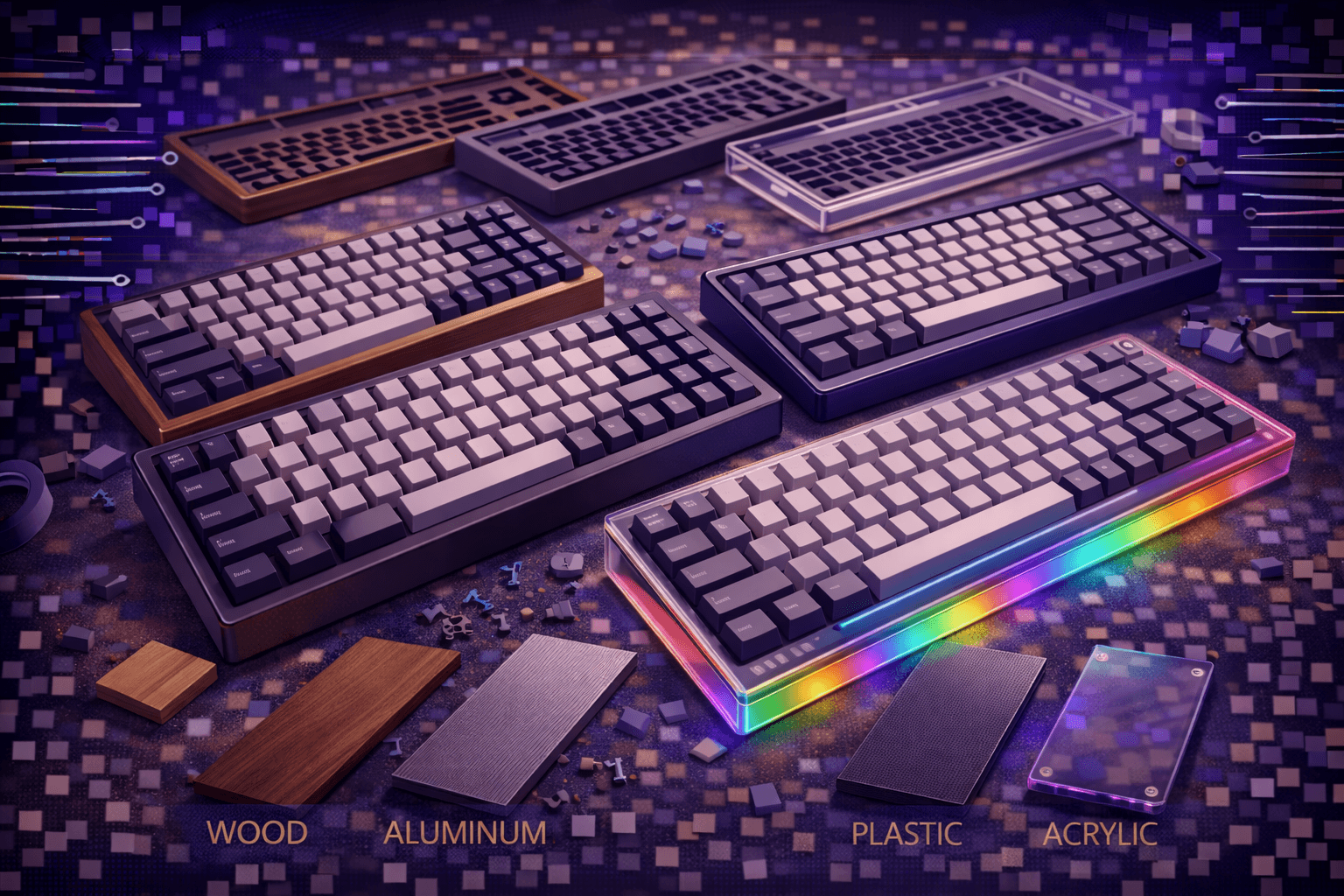
This comprehensive guide explores keyboard case materials (aluminum, plastic, brass, wood, acrylic, polycarbonate) analyzing acoustic properties and durability, explains case construction methods (CNC machining, injection molding, die-casting), covers mounting styles affecting typing feel, discusses weight and density impacts on stability and sound, and helps match case selection to usage priorities and budget constraints.
Whether evaluating pre-built keyboard quality, planning custom build, or considering case upgrades, understanding case fundamentals enables optimization of mechanical keyboard typing experience through informed material and design choices.
Note: This guide contains affiliate links. If you purchase through our links, we may earn a commission at no extra cost to you. This helps support our testing and content creation.
Keyboard Case Materials Overview
Aluminum (Premium Standard)
Material Properties:
- Exceptional rigidity and structural strength
- Superior durability (scratch-resistant, resistant to cracking)
- Substantial weight (500-1500g typical depending on size)
- Excellent acoustic properties (deep resonant tone)
- Premium feel and appearance
- Higher cost ($100-400+ for quality CNC aluminum cases)
Acoustic Characteristics: Deep, solid, controlled resonance. Reduces hollowness characteristic of budget keyboards. Creates satisfying "thock" sound mechanical keyboard enthusiasts prize. Aluminum's density effectively absorbs and controls vibrations.
Aluminum Types:
- 6061 aluminum (most common): Good balance of workability, cost, and strength. Industry standard for keyboard cases.
- 7075 aluminum (aerospace grade): Harder, more durable, more expensive. Used in premium custom keyboards.
- Anodized finishes (various colors): Black, gray, silver, blue, red, purple. Anodizing provides corrosion protection and color options. Most popular aluminum finish.
Best applications: Premium pre-built keyboards, custom keyboard builds, enthusiasts prioritizing superior sound and premium feel.
Value proposition: Higher initial cost justified by superior acoustics, durability, and premium typing experience.
Plastic Cases (Most Common)
ABS (Acrylonitrile Butadiene Styrene):
- Lightweight and portable
- Cheap to manufacture (injection molding)
- Decent durability for average use
- Can feel hollow and cheap (thin walls especially)
- Prone to yellowing over extended time
- Most budget keyboards under $100 use ABS
- Cost: $20-60 for manufacturer
PC (Polycarbonate):
- More durable than ABS
- Better acoustic properties than basic ABS
- Transparent or translucent options available
- More expensive than ABS ($50-150 retail)
- Doesn't yellow over time
- Premium plastic choice
- Used in mid-range keyboards and gasket-mount designs
Nylon-reinforced plastic:
- Enhanced structural strength vs basic plastic
- Better long-term durability
- Mid-range keyboards ($80-180)
- Improved acoustic properties vs thin ABS
Sound Characteristics: Higher pitched, more hollow than metal. Can ping or rattle from vibrations. Varies significantly by plastic thickness and design quality. Thin plastic walls more prone to hollowness.
Best applications: Budget keyboards ($50-100), keyboards prioritizing light weight, RGB-based keyboards using transparent polycarbonate, portable keyboards.
Acoustic optimization: Case foam and tape mod modifications significantly improve plastic case sound quality.
Brass (Extreme Luxury Weight)
Material Properties:
- Extremely heavy material (1000-2000g+)
- Very rigid and dense
- Exceptional durability
- Unique deep acoustic signature
- Very expensive ($200-500+ as full case, often used as weight inserts)
- Often combined with other materials rather than full case
Acoustic Characteristics: Deepest, heaviest sound possible. Maximum bass frequencies and bass response. Extremely controlled resonance with minimal unwanted vibration. Creates premium acoustic experience.
Applications:
- Weight inserts in aluminum cases (brass weight pieces adding density)
- Full brass case rare and extremely expensive
- Luxury custom builds
- High-end group buys
Best applications: Luxury builds for sound enthusiasts, users wanting maximum desk stability and weight, collectors prioritizing maximum acoustic refinement.
Practical considerations: Cost extremely high. Weight inserts in aluminum cases common compromise providing some brass benefits at lower cost.
Wood Cases (Artisan Aesthetic)
Material Properties:
- Natural warm aesthetics
- Moderate weight (500-1200g typical)
- Excellent acoustic dampening properties
- Requires maintenance (occasional oils, avoid moisture exposure)
- Handcrafted feel and visual uniqueness
- Expensive ($150-400+ for quality wood cases)
Common Wood Types:
- Walnut: Dark, dense, premium feel
- Maple: Light, fine grain, refined appearance
- Oak: Medium color, prominent grain, rustic character
- Bamboo: Sustainable, smooth, modern aesthetic
- Cherry: Warm reddish tone, fine grain
Acoustic Characteristics: Warm, muted, naturally dampened tone. Excellent sound absorption creating quiet typing experience. Wood's natural properties provide inherent dampening without additional modifications.
Best applications: Aesthetic enthusiasts preferring natural materials, users valuing unique visual appearance, minimalist desk setups, sustainable material preference.
Maintenance requirements: Occasional oil treatment maintaining finish, protection from moisture, temperature stability preferred.
Acrylic Cases (Transparent Showcase)
Material Properties:
- Transparent or translucent allowing internal visibility
- Showcases RGB lighting and internal components
- Moderate weight
- Brittle material (cracks if dropped)
- Moderate cost ($80-200)
- Requires careful handling and protection
Aesthetic Benefits:
- Shows switch mechanism, stabilizers, PCB visually
- RGB underglow and per-key lighting fully visible
- Creates futuristic, tech-forward appearance
- Unique visual customization option
Acoustic Characteristics: Similar to plastic cases but clarity can sometimes emphasize switch sounds. Varies by acrylic thickness and quality. Generally bright acoustic profile.
Best applications: RGB enthusiasts, visual customization priority, users wanting showcase aesthetics, transparent keyboard aesthetic preference.
Practical considerations: Requires careful handling. Scratches and dust visible through transparency. Dust management important for visual appeal.
Polycarbonate Cases (Flexible Premium Plastic)
Material Properties:
- Flexible yet strong material
- Excellent impact resistance and durability
- Good acoustic properties (better than basic ABS)
- Commonly used in gasket-mount keyboard designs
- Mid-range pricing ($100-250)
- Natural material alternative to rigid metals
Acoustic Characteristics: Softer, more muted than rigid aluminum materials. Absorbs vibrations through flexibility. Creates smooth controlled typing experience. Reduces harshness common in rigid cases.
Applications:
- Gasket-mount keyboard designs
- Premium plastic keyboard option
- Flex-mount and isolation systems
- User preference for bouncy typing feel
Best applications: Gasket-mount keyboards, users preferring softer typing feel with vibration absorption, balanced sound quality at reasonable cost, users wanting flexibility over rigidity.
Case Construction Methods
CNC Machining (Premium Precision)
Manufacturing Process:
Computer-controlled mills precisely carve keyboard case from solid aluminum or brass block material. Multi-axis CNC machines create precise tolerances and complex geometries impossible with other methods.
Advantages:
- Extremely precise tolerances (±0.1mm typical)
- Complex and intricate designs possible
- Superior surface finish quality
- Consistent high-quality results
- Premium feel and appearance
- Unlimited design flexibility
- Perfect fitment of components
Disadvantages:
- Very expensive ($150-400+ for case alone)
- Significant material waste (70-80% of original block removed)
- Time-consuming production (hours per case)
- Limited to machineable materials
- Requires expensive equipment and skilled operators
- Minimum order quantities for cost viability
Applications: Premium custom keyboards, high-end pre-built keyboards, enthusiast projects, group buys with limited quantities.
Cost justification: Superior precision and quality justify premium pricing for serious enthusiasts.
Injection Molding (Budget Mass Production)
Manufacturing Process:
Molten plastic (ABS, polycarbonate, or nylon) injected into steel molds under high pressure creating case shape. Fast and highly scalable manufacturing process.
Advantages:
- Very cheap manufacturing cost at scale
- Very fast production (seconds per unit)
- Complex shapes and intricate details easily achieved
- Consistent mass production possible
- Minimal material waste
- Perfect for budget keyboards
- Economies of scale reduce per-unit cost dramatically
Disadvantages:
- High initial tooling costs ($10,000-50,000+ for molds)
- Limited to plastic materials
- Quality varies significantly based on process precision and wall thickness
- Often produces thinner walls (more hollow sound)
- Design changes require new mold investment
- Less precision than CNC machining
Applications: Budget keyboards, mass-market production, keyboards under $100-150, most pre-built keyboards.
Cost model: High upfront mold cost offset by low per-unit production cost enabling cheap mass production.
Die-Casting (Mid-Range Aluminum)
Manufacturing Process:
Molten aluminum forced into steel mold under high pressure creating aluminum case. Combines some benefits of CNC precision with molding speed.
Advantages:
- Cheaper than CNC for aluminum cases
- Faster production than CNC machining
- Good strength and durability
- Reasonable cost ($80-200 per case)
- Allows decent design complexity
- Better precision than injection molding
Disadvantages:
- Less precise than CNC machining (±0.5mm typical)
- Limited design complexity versus injection molding
- Surface finish not as refined as hand-finished CNC
- More expensive than injection-molded plastic
- Still requires tooling investment
- Quality varies by casting precision
Applications: Mid-range aluminum keyboards, affordable metal options, keyboards $100-250 range.
Value proposition: Provides aluminum benefits at lower cost than CNC, good middle-ground option.
3D Printing (Customization and Prototyping)
Manufacturing Process:
Additive manufacturing building keyboard case layer by layer from resin, plastic, or metal powder. Increasingly used for custom one-offs and prototypes.
Advantages:
- Ultimate customization and design flexibility
- No tooling costs enabling affordable one-offs
- Excellent for prototyping and testing designs
- Complex geometries and organic shapes possible
- Quick turnaround (hours to days)
- Custom modifications easy to implement
Disadvantages:
- Weaker than other manufacturing methods
- Visible layer lines affecting finish quality
- Time-consuming production (hours per case)
- Not suitable for mass production economically
- Limited material options
- Surface finish requires post-processing
- Expensive for production quantities
Applications: Prototypes, custom one-off builds, experimental designs, hobbyist projects, design testing.
Growing role: Increasingly viable for custom keyboard community enabling ultimate personalization.
Keyboard Case Mounting Styles
Tray Mount (Budget Standard)
Design Mechanics:
PCB screws directly to keyboard case bottom via brass standoffs. Case and PCB move together as single unit.
Characteristics:
- Most common mounting style in budget keyboards
- Rigid non-flexible typing experience
- Can feel harsh or jarring on bottom-out
- Often produces hollow sounding keyboard
- Cheap to manufacture
- Minimal components required
Typing Feel: Rigid direct feel. Full switch response travels through case. Some users find this responsive, others find harsh.
Sound Profile: Tends toward hollowness and metallic ping from vibrations traveling directly through case. Benefits significantly from case foam and tape mod acoustic modifications.
Cost: Budget-friendly, included in all budget keyboards.
Best for: Budget users, those prioritizing affordability over premium feel.
Top Mount (Improved Standard)
Design Mechanics:
Plate attaches to case top while PCB suspends below. See our keyboard plates guide for how plate material affects sound and feel. Mounting adds isolation layer reducing direct case/plate contact.
Characteristics:
- More common than tray mount in mid-range keyboards
- Some flex and bounce possible
- Better acoustics than tray mount through isolation
- More moderate manufacturing cost
- Additional assembly complexity
Typing Feel: Slightly more forgiving than tray mount. Some give/bounce on bottom-out. More responsive than gasket mount.
Sound Profile: More controlled than tray mount. Deeper, cleaner sound. Less hollow echo. Improved isolation reduces case resonance.
Cost: Mid-range, $80-200 typical retail.
Best for: Mid-range keyboards, users wanting improvement over tray mount without premium gasket pricing.
Gasket Mount (Premium Flexible)
Design Mechanics:
Plate and PCB suspended on gaskets (rubber strips or grommets) between top and bottom case. Gaskets provide isolation and flex.
Characteristics:
- Flexible bouncy typing feel
- Excellent sound isolation through gasket dampening
- Premium mounting style increasing cost
- More complex assembly
- Gasket compression/stiffness affects feel significantly
- Increasingly common in $150+ keyboards
Typing Feel: Soft and bouncy. Gives on bottom-out then returns. Creates feeling of "floating" keys. Many users prefer this feel.
Sound Profile: Softest most refined sound. Gaskets absorb harshness. Creates smooth controlled typing experience with minimal case ring.
Gasket stiffness: Measured in gasket hardness and thickness. Affects feel—stiffer gaskets feel more responsive, softer gaskets more cushioned.
Cost: Premium mounting adding $30-100+ to keyboard cost.
Best for: Enthusiasts prioritizing typing feel, users wanting refined acoustics and bounce, premium keyboards.
Sandwich Mount (Vintage/Compact)
Design Mechanics:
Plate sandwiched between top and bottom case layers compressed tightly together. No flex or isolation.
Characteristics:
- Very rigid typing
- No flex whatsoever
- Precise direct feel
- Vintage mounting style
- Compact designs enabled
- Minimal components
Typing Feel: Very rigid and direct. Full feedback transmitted immediately. Responsive for typing. No give or cushioning.
Sound Profile: Bright and sharp. No dampening from mounting system. Direct switch sound emphasis. Can sound harsh without proper case materials.
Best for: Typists preferring responsive rigid feel, compact keyboard designs, budget simplicity.
Isolated Mount (Burger Mount)
Design Mechanics:
Plate/PCB stack sits on isolating material (O-rings, rubber gaskets) between case layers. Maximum isolation approach.
Characteristics:
- Excellent isolation from case
- Bounce and flex possible
- Premium mounting approach
- Complex assembly required
- More components needed
Typing Feel: Very soft and isolated. Minimal case interaction. Bouncy responsive feel. Premium typing experience.
Sound Profile: Very clean isolated switch sounds. Minimal case resonance. Each keypress sounds distinct. Refined acoustic experience.
Best for: Premium enthusiasts, users wanting maximum isolation and clean sound.
Acoustic Properties by Material
Material Sound Ranking
Deepest/Bassiest to Highest/Brightest:
-
Brass: Maximum depth, heavy bass response, minimal unwanted resonance. Deepest sound possible.
-
Aluminum: Deep controlled sound, satisfying "thock" response, balanced frequency response.
-
Wood: Warm muted sound, natural dampening, quiet typing experience.
-
Polycarbonate: Soft muted sound, flexible dampening, smooth character.
-
Thick ABS plastic: Moderate depth, some hollowness, moderate sound quality.
-
Thin ABS plastic: Hollow high-pitched sound, metallic ping, cheap-sounding.
-
Acrylic: Bright clear sound, emphasizes switches, resonant character.
Acoustic Property Explanation
Density and mass: Heavier denser materials (brass, aluminum) create deeper sounds through superior vibration control and energy absorption.
Rigidity: Rigid materials (aluminum, brass) prevent unwanted flex and movement reducing hollow resonance common in flexible materials.
Dampening: Flexible materials (wood, polycarbonate) absorb vibrations through flexibility creating muted quieter typing.
Resonance frequency: Each material has natural resonance frequency. Materials emphasize certain frequencies while dampening others.
Wall thickness: Thicker case walls reduce hollowness regardless of material. Thin plastic sounds hollow, thick plastic acceptable quality.
Internal cavity design: Acoustic chamber shape and volume affect sound propagation and resonance characteristics.
Sound Modifications Affecting Cases
Case foam installation: Fills internal cavity reducing echo and hollowness. Improves all case types, especially plastic cases.
Dampening materials: Additional sound absorption (tape mod, gasket foam) on case interior modifying acoustics.
Weight additions: Heavier internal components and inserts create deeper sound through increased mass.
Mounting style changes: Upgrading from tray mount to gasket mount dramatically improves sound even with identical case material.
Alternative materials: Combining different materials (aluminum case with wood side panels) creates hybrid acoustic properties.
Acoustic Reality Check
Perfect sound doesn't exist. Sound preference highly subjective. Different users prefer:
- Deep thocky sound (aluminum/brass enthusiasts)
- Clacky bright sound (acrylic/thin plastic users)
- Muted quiet sound (wood/PC preferences)
- Natural unmodified sound (varies by preference)
No objectively "best" material—only preference-matched materials creating satisfying typing experience.
Weight and Stability Impact
Case Weight Categories
Lightweight (<500g):
- Portable and convenient for transport
- Less desk presence and impact
- Can slide during intense typing or gaming
- Feels less substantial and premium
- Typical budget injection-molded plastic keyboards
- Advantage: High portability
Medium Weight (500-1000g):
- Good balance between portability and stability
- Adequate desk presence and stability
- Minimal sliding during normal typing with standard desk pad
- Feels more substantial and quality
- Typical aluminum TKL keyboards
- Sweet spot for most users
Heavy (1000-1500g):
- Excellent stability on most desk surfaces
- Significant desk presence
- Premium substantial feel
- Reduced portability (less convenient to move)
- Typical aluminum full-size or aluminum with brass accent keyboards
- Preferred by gamers and professional typists
Very Heavy (1500g+):
- Maximum stability (keyboard won't move during any use)
- Extreme desk presence and visual impact
- Premium luxury feel
- Significantly reduced portability
- Brass cases or heavily weighted aluminum builds
- Diminishing returns for most practical uses
Stability Practical Applications
Competitive gaming: Heavy keyboards won't shift during intense rapid keypresses. Critical for esports and competitive gaming.
Professional typing: Moderate weight sufficient for all-day typing. Ultra-heavy unnecessary unless specific preference.
Desk surface material: Soft desk pads and mouse pads reduce sliding even for light keyboards. Hard desk surfaces benefit from heavier keyboards.
Personal preference: Some users love substantial heft and desk presence. Others value portability and reduced strain.
Weight Distribution
Well-designed heavy keyboards distribute weight evenly preventing imbalance. Poor designs may feel front-heavy, back-heavy, or unstable affecting typing comfort and experience negatively.
Aesthetic Considerations
Case Finishes
Anodized aluminum (most popular):
- Various colors available (black, gray, silver, blue, red, purple, custom)
- Extremely scratch-resistant
- Premium appearance
- Corrosion protection
- Most common aluminum keyboard finish
- Matte or glossy options
Powder-coated finish:
- Textured matte surface
- Durable protective coating
- Color options
- Hides minor imperfections
- Warm hand feel
E-coating (electrophoretic coating):
- Smooth durable finish
- Various colors
- Keyboard-safe chemical resistance
- Professional appearance
Raw/polished metal:
- Natural metal appearance
- Shows fingerprints easily
- Requires regular maintenance and cleaning
- Industrial aesthetic appeal
- Develops patina over time (brass especially)
Painted finish:
- Budget-friendly coating option
- Chips and scratches easily with use
- Limited durability
- Color variety possible
- Less professional than anodized
Material Visual Aesthetics
Aluminum: Modern, professional, premium appearance. Neutral aesthetic complements most desk setups.
Wood: Natural warm appearance, artisan feel, visual uniqueness. Creates distinctive memorable aesthetic.
Acrylic: Futuristic, tech-forward, RGB showcase appearance. Contemporary visual appeal.
Plastic: Clean simple appearance, varies significantly by quality. Budget plastic looks cheap, premium plastic acceptable.
Brass: Luxury industrial appearance. Develops patina over time adding character. Statement piece aesthetic.
Visual Design Coordination
Consider keyboard case aesthetics in relation to:
- Keycap colors and profiles
- Desk setup and peripherals (mouse, monitor, speakers)
- Room decor and overall environment
- Personal style and aesthetic preferences
- Workspace professionalism or personality
Premium materials justify higher cost partly through aesthetic visual presence and desk impact beyond pure performance metrics.
Budget and Value Analysis
Budget Tier Breakdown
Under $50 (Budget Entry):
- Plastic injection-molded cases exclusively
- Thin walls prone to hollowness
- Basic tray mount mounting
- Adequate for basic functionality
- Significant potential for sound improvements through modifications
- Examples: Redragon, Royal Kludge budget models, Amazon basic keyboards
$50-150 (Mid-Range Sweet Spot):
- Thick quality plastic or die-cast aluminum
- Better acoustics than budget options
- Top mount or gasket mount possible
- Decent build quality and durability
- Good value proposition
- Best cost-to-benefit ratio
- Examples: Keychron C/K series, Ducky One 2, Leopold FC660M
$150-300 (Premium Enthusiast Entry):
- CNC aluminum common
- Gasket or top mount standard
- Excellent acoustic properties
- Premium feel and exceptional durability
- Clear quality improvement over budget
- Enthusiast entry level
- Examples: Keychron Q series, Mode Sonnet, KF87
$300-500 (High-End Custom):
- Premium CNC aluminum
- Advanced mounting systems
- Brass weight inserts or accents
- Refined acoustic characteristics
- Enthusiast grade quality
- Luxury feel
- Examples: Zoom TKL, Iron165, Satisfaction75
$500+ (Luxury/Collector):
- Full brass cases or exotic materials
- Ultimate build quality
- Limited production runs or fully custom
- Collector pieces
- Diminishing returns for practical use
- Paying for exclusivity and rarity
- Examples: Keycult, TGR, high-end group buys, custom commissions
Value Optimization Strategy
Best value sweet spot: $150-250 range. Quality CNC aluminum, gasket mount, excellent construction without extreme premium pricing.
Diminishing returns: Beyond $300, improvements become incremental. Additional spending pays for exclusivity, rarity, and prestige rather than functional improvement.
Budget optimization strategy: Quality plastic keyboards ($80-150) combined with acoustic modifications (tape mod, case foam, PE foam) can acoustically compete with unmodified $200+ stock keyboards at fraction of cost.
Practical recommendation: Identify personal priorities (sound, feel, aesthetics, portability) then select keyboard tier matching those priorities rather than pursuing maximum specifications.
FAQ
Q: What's the best keyboard case material overall?
A: Aluminum provides best balance of sound quality, durability, and premium feel at reasonable cost. Budget option: quality thick plastic cases adequate with modifications. Luxury option: brass deepest sound possible. Personal preference matters—no universal "best" material. See materials section above.
Q: Does keyboard case material actually affect typing feel?
A: Yes, significantly. Material rigidity, weight, and mounting style all profoundly affect typing feel. Gasket mount softer/bouncier. Tray mount rigid/responsive. Heavy cases more stable. Weight and mounting matter as much as material. See mounting section above.
Q: Are plastic keyboard cases actually any good?
A: Depends on quality and thickness. Thin budget plastic hollow and cheap feeling. Thick well-designed plastic adequate quality. Polycarbonate (PC) excellent plastic option rivaling some aluminum. Quality varies—cheap plastic bad, premium plastic acceptable. See plastic section above.
Q: Why are CNC aluminum keyboard cases so expensive?
A: CNC machining labor-intensive with 70-80% material waste. Premium aluminum, anodizing, precision manufacturing, skilled labor add significant costs. Die-cast aluminum more affordable alternative. See construction section above.
Q: How much should a good keyboard case weigh?
A: 500-1000g good balance between stability and portability. Under 500g may slide during typing. Over 1500g reduces portability excessively. Gamers prefer heavier (stability). Travelers prefer lighter. Personal preference determines ideal. See weight section above.
Conclusion
Keyboard cases fundamentally shape mechanical keyboard typing experience through material selection, construction quality, and mounting system design. Aluminum delivers premium sound quality and durability justifying higher costs for serious enthusiasts and typists. Quality plastic cases perform adequately for budget-conscious users, especially with acoustic modifications (tape mod, case foam).
Exotic materials (brass, wood, acrylic) serve niche preferences and aesthetic goals trading cost for specific acoustic and visual characteristics. Construction method matters—CNC machining produces maximum precision and quality at high cost, injection molding enables affordable mass production.
Mounting style profoundly affects typing feel and acoustics—gasket mount provides soft refined experience, tray mount offers rigid responsive feel at budget cost. Weight distribution affects stability and desk presence significantly.
Understanding case fundamentals enables informed keyboard selection matching personal priorities. Budget-conscious users maximize value through quality plastic cases combined with acoustic modifications. Enthusiasts justify aluminum investment for superior acoustics, premium feel, and build quality. Luxury materials appeal primarily to collectors and premium audio-focused users.
Case selection balances sound characteristics, budget constraints, aesthetic preferences, and practical requirements creating optimal foundation for satisfying mechanical keyboard typing experience.